
The two countries also signed three other agreements -- to enhance aviation links, to jointly work in the area of energy efficiency and promotion of parliamentary cooperation.
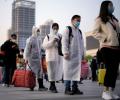
The move comes a day after China lifted the 76-day lockdown in Wuhan, where the pandemic originated. China's National Health Commission (NHC) on Thursday reported 63 new confirmed cases of the coronavirus, including 61 imported ones taking the total to 1,104 cases.

She was a Hollywood star, much sought after. She also helped invented technology which changed the world.

The local intelligence wing had suggested not to carry out large anti-Naxal operations in south Bastar forests, where the ultras recently killed 14 Central Reserve Police Force personnel, citing geographical complications and strong Maoist 'Jantana Sarkar' network, a senior police official said.

On display was India's military might and cultural diversity.

Dr Sethuraman 'Panch' Panchanathan, senior vice president, Office of Knowledge Enterprise Development, ArizonaStateUniversity, was last week appointed to the United States National Science Board by President Barack Obama.
.jpg)
In India, the need to find a solution for the jobs problem is perhaps even more urgent considering the oft-quoted number of a million young people arriving every month looking for jobs.
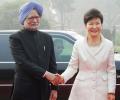
South Korean President Park Geun-hye's visit to India will enhance economic and military ties between the two countries and give the relationship a strategic dimension, says Jiye Kim.

'India-China economic ties are likely to take a hit in the wake of the new situation, but that also provides India with a new opportunity to strengthen its manufacturing base,' points out Dr Rajaram Panda.
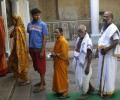
The new government has to make conscious efforts to rebuild social equality and bring the people together.

'A lot will depend on the first Aayog and the power it derives.'

Budget proposals have set four goals to transform Indian Railways.

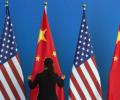
Chinese observers believe the Sino-US relationship will be impacted by issues in North Korea, Japan, India, Ukraine and Iran and that conflicts with these 'third parties' will without exception ultimately become conflicts between China and the US, points out former RA&W officer Jayadeva Ranade.
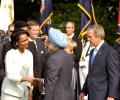
The night before Dr Singh was to meet President Bush, he said he could not sign the agreement.

Mumbai is observing the sixth anniversary of the dastardly attacks that shook the city
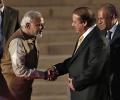
Prime Minister Narendra Modi has brought Hindi into vogue in the external affairs ministry and managed a diplomatic coup by inviting SAARC leaders, including Nawaz Sharif, to New Delhi for his swearing-in. Sheela Bhatt's impressions of the Indian prime minister's first day in office.

Modi's visit to some developed countries such as the US, Japan, China and Australia were sprinkled with humongous investment figures. But do we have the wherewithal to absorb such big investments?

20 years ago this day, May 11, 1998, India conducted its second nuclear test at Pokharan in Rajasthan. In a fascinating interview on Rediff.com, K Subrahmanyam revealed how Indian PMs reacted to nuclear ambitions.

'When the United States and India make common cause there's really no challenge that we can't tackle, there's no mission that we can't overcome,' believes senior US official Nisha Desai Biswal
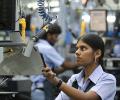
Tax problems and unfavourable WTO agreements are making Tamil Nadu's electronics corridor less attractive to companies.

President Pranab Mukherjee on Monday addressed the first joint sitting of Parliament as mandatorily required under the Constitution after the general elections. The address is the political, economic and foreign policy road map of the Narendra Modi government and covers virtually all crucial areas.

November 12 marks 25 years of the beginning of the World Wide Web. Shivanand Kanavi gives us the story of how it all began.

Like China, India needs to encourage 'hacker clubs' in view of the challenges of virtual terrorism, says Lieutenant General Prakash Katoch (retd)

Company claims new use for kala jeera extract, provoking alarmed campaigners here and abroad; says reaction not based on facts.
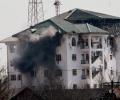
'Just this week, the Indians killed a Kashmiri terrorist, who is a member of Hizbul Mujahideen.' 'This is a nasty terrorist organisation, and did Pakistan welcome this killing?' 'No, in fact, they denounced it and referred to him as a Kashmiri separatist.' 'These Kashmiri terrorist groups have been aided by the Pakistani State.'

The external affairs ministry's files, as distinct from those of the ministry of defence or the agencies, at least from before 1974 should be declassified. And if select files that are more than 40 years old are not to be declassified, the ministry should follow explicit guidelines to justify taking such a view, says Jaimini Bhagwat.

The Indo-Japanese nuclear deal may not come easy considering India's Civil Nuclear Liability Act provisions which had earlier put off suppliers like General Electric, says Debalina Ghoshal.
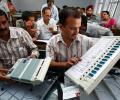
'Although the Election Commission remains convinced about the EVM's integrity, as a fair umpire of the game it was necessary to travel the last mile to convince political players that the entire process was not only fair but transparently so.' A fascinating excerpt from former Chief Election Commissioner Navin Chawla's new book, Excerpted from Every Vote Counts: The Story Of India's Elections.

Moving ahead with their new mantra -- Chalein Saath Saath: Forward Together We Go -- Prime Minister Narendra Modi and United States President Barack Obama on Tuesday vowed to deepen cooperation in every sector for the benefit of global stability and people's livelihoods over the next ten years.

With the launch of the first indigenous aircraft today, India will join a club of nations like the United States, Russia, China, the United Kingdom and France that possess nuclear-powered submarines

The facts remain cloaked in mystery, but the legend goes that Talpade had created a flying machine powered by mercury and solar energy, and based on ideas outlined in Vedic texts.

What is Change really like in Bihar? Once seen as India's basket-case, what is its turnaround story like?

'It is highly doubtful that the Trump administration will consider inserting itself into the volatile India-Pakistan dispute.'

'While economic ties are making incremental progress, it is in the security and strategic domains that the India-Japan synergy is more compelling,' says Dr Rajaram Panda.

'The unique achievements have been made by engineers from small towns who have had a non elite upbringing and who have grown with the programme,' says R Aravamudan, one of the pioneers of the Indian space programme.
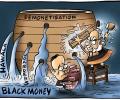
'Modi is likely to make more announcements to win or retain popularity, and put himself at the centre of things even more than now,' says T N Ninan.

Indian economy about to take-off

'It will take many years to clean the Ganga. It will not happen in five years like the prime minister wants. If you want it to be sustainable, temporary measures won't work.' Twinkle Tom, an environmental engineer by training (from Stanford no less!), now designs wedding gowns because India, sadly, does not want her expertise and skill.

What is Change really like in Bihar? Once seen as India's basket-case, what is its turnaround story like? Archana Masih reports from India's other most talked about state.
